
Let’s get one thing straight from the beginning: Elliott Wave analysis is not about being right. It’s about being prepared.
One of the most powerful, yet misunderstood aspects of Elliott Wave is the idea that there’s always more than one valid scenario. That might sound frustrating at first. “Why can’t there just be one answer?” But it’s actually what makes Elliott Wave such a game-changing tool in the hands of a skilled trader.
Because here’s the truth: the market doesn’t offer certainty. Ever. People crave certainty. They want the answer, the move, the setup. But the market is a living, breathing thing. It’s constantly shifting. It’s emotional. It doesn’t move in straight lines or follow clean, mechanical rules.
What Elliott Wave gives you isn’t certainty. It gives you clarity.
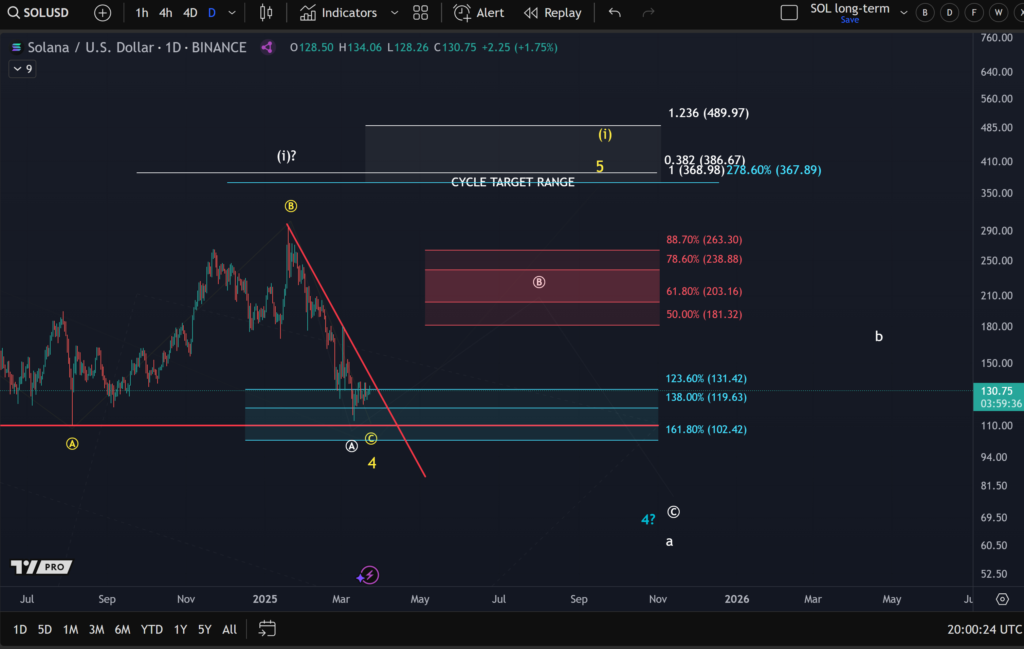
Go With the Flow, But Know Where the River Splits
Think of the market like a river. You can’t force it to flow where you want it to go. But you can learn to ride it. Elliott Wave helps you understand the currents. It shows you that up ahead, the river might split—left or right. Your job isn’t to build a dam. Your job is to ride the flow, stay alert, and adjust when the current shifts.
Most traders get lost because they try to force one fixed idea on the market. But with Elliott Wave, you reduce the infinite possibilities down to maybe two or three likely paths. That’s where the power lies. You’re not reacting to chaos anymore. You’re surfing a structure.
Two Scenarios. One Pivot. Your Tactical Setup.
At the core of every solid Elliott Wave analysis are ideally two scenarios—a primary and an alternative. Between them lies the pivot. A specific price level where the balance of probability shifts.
If the market holds above that pivot, the primary scenario stays intact. If it drops below, the alternative takes over. This isn’t about guessing right. It’s about managing risk and reward based on structure.
You’re not just watching candles. You’re tracking psychology. You’re staying flexible without being directionless.
Risk. Reward. And the Confidence to Wait.
This kind of setup isn’t rigid. It’s structured freedom. You’re not jumping in because of FOMO or fear. You’ve got a framework. You know that if scenario A plays out, you’ve got upside potential with a defined risk. If scenario B unfolds, you avoid a trap – or even position the other way.
This mindset gives you patience. It gives you permission to wait. To observe. To act when the odds align.
This Knowledge Is Gold
Most people don’t know how to think like this. They either overcomplicate it with ten scenarios and end up paralyzed, or they cling to one idea and ignore reality.
But once you embrace that having two clear scenarios is not weakness, but strength, you’re thinking like a pro.
You’re not trying to predict every twist. You’re following the structure. You’re in the flow – but with a map.
So next time you chart a setup, ask yourself:
What’s my primary scenario? What’s my alternative? And where’s the pivot that tells me which one’s playing out?
If you’ve got those three things in place, you’re not guessing anymore. You’re trading with edge.
And that edge – that awareness of structure in the chaos? That’s Elliott Wave at its best.
