
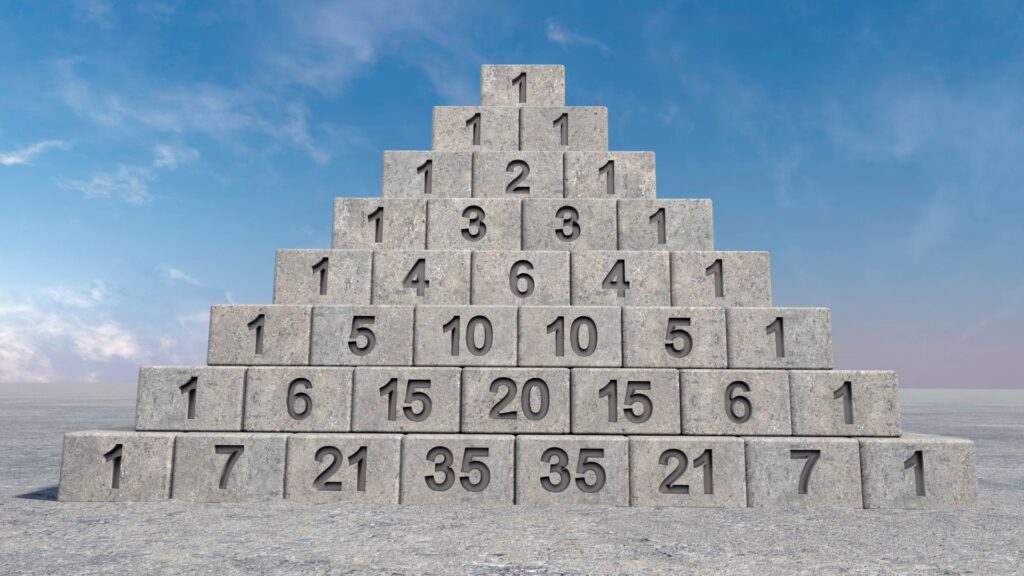
The decline of the Roman Empire in 476 C.E. marked a period of stagnation in European intellectual progress, often referred to as the Dark Ages. However, a resurgence began around the 10th century, leading to a period of rediscovery and advancement. In this era, one of the pivotal figures was Leonardo Pisano, commonly known as Leonardo Fibonacci. Born around 1170 C.E., Fibonacci was the son of a prosperous Italian merchant, Guglielmo Bonnacci, who exposed him to the vibrant cultures and knowledge systems of the Mediterranean. Fibonacci’s early exposure to diverse mathematical ideas and his subsequent travels across the Mediterranean helped him acquire a broad understanding of different numeral systems and commercial practices. His journeys not only expanded his knowledge but also facilitated the integration of Eastern and Western mathematical concepts, which proved instrumental in his later works. Fibonacci’s keen interest in numbers and their practical applications laid the groundwork for significant mathematical advancements in Europe.
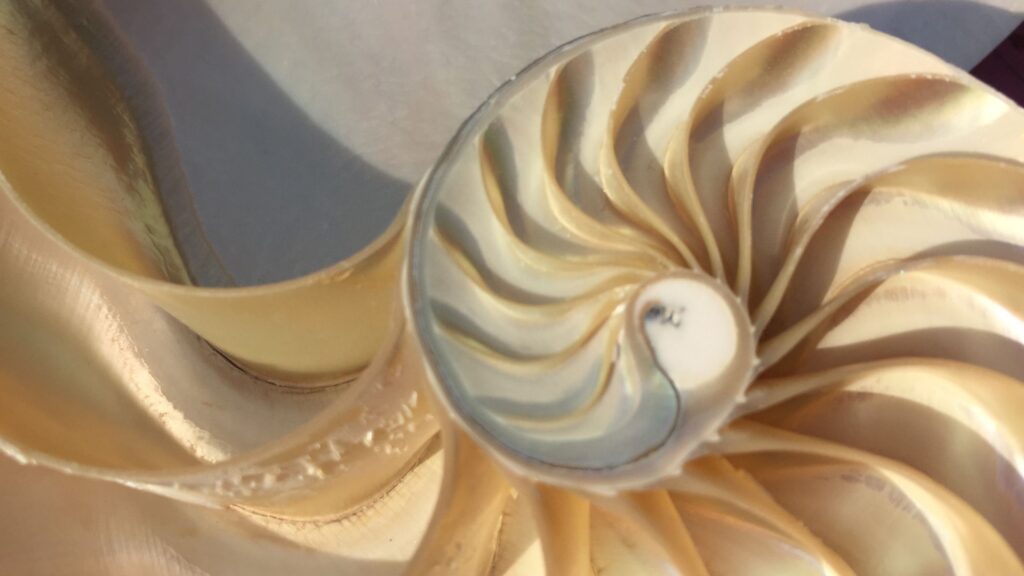
Fibonacci’s most notable contribution came from his exposure to the Hindu-Arabic numeral system, which he encountered while traveling with his father. Recognizing its superiority over the cumbersome Roman numerals, Fibonacci became an advocate for its use in Europe. His influential work, Liber Abaci (The Book of Calculation), played a crucial role in popularizing these numerals and laid the groundwork for modern mathematics in the West.

One of the most famous concepts introduced in Liber Abaci is the Fibonacci sequence. This series begins with the numbers 1, 1, followed by each subsequent number being the sum of the previous two: 2, 3, 5, 8, 13, and so on. The ratio between consecutive numbers in the sequence converges towards approximately 1.618, a value known as the Golden Ratio or Phi. This constant is not merely a mathematical curiosity; it has deep implications across various domains, including nature, art, and even financial markets.
The Golden Ratio, symbolized by Phi, appears in the proportions of numerous natural and human-made structures. From the spirals of shells and galaxies to the architectural designs of ancient monuments like the Parthenon, Phi represents an intrinsic aesthetic harmony. Leonardo da Vinci famously depicted these proportions in his drawing “Vitruvian Man,” illustrating the Fibonacci relationships within the human body.

In nature, the Fibonacci sequence can be observed in the arrangement of leaves on a stem, the branching of trees, the pattern of florets in a flower, and the structure of pinecones and pineapples. For example, the seeds in a sunflower are arranged in spirals that adhere to Fibonacci numbers, optimizing the plant’s ability to pack seeds efficiently. Additionally, the shells of certain mollusks, such as the nautilus, grow in a logarithmic spiral that closely aligns with the Golden Ratio.
In the realm of finance, Fibonacci numbers are integral to the Elliott Wave Theory, a method used to analyze and predict market trends. Developed by R.N. Elliott, this theory posits that market prices move in a fractal pattern of waves. Typically, these waves follow a five-step progression in the direction of the main trend, followed by a three-step correction. These movements often correspond to Fibonacci ratios, providing traders with a powerful tool for anticipating market behavior.
For traders, the practical application of Fibonacci numbers lies in identifying potential levels of support and resistance. These levels are derived from key Fibonacci ratios, such as 38.2%, 50%, and 61.8%. By mapping these percentages onto market charts, traders can forecast possible reversal points and make more informed trading decisions. This method, known as Fibonacci retracement, helps in setting entry points, stop-loss levels, and profit targets.
Beyond markets, Fibonacci’s principles can be observed in various aspects of human decision-making and social behavior. Studies have demonstrated that individuals unconsciously exhibit preferences that align with Fibonacci ratios. For instance, experiments have shown that when people sort objects, they often do so in proportions that approximate the Golden Ratio. This suggests that our choices and actions are influenced by the same mathematical principles that govern natural phenomena.
The universality of Fibonacci’s discoveries underscores their importance. From the structure of our lungs and the branching patterns of trees to the ebb and flow of financial markets, these numbers reveal an underlying order in seemingly chaotic systems. The Golden Ratio, in particular, is seen as a key to understanding the harmony of the universe, as it manifests in everything from art and architecture to biology and economics.
If you’re interested in finding out more about Fibonacci ratios, how they matter, and how to use Fibonacci retracement and extension tools in trading, feel free to check out our silver and gold memberships. You can join via the subscriptions page on our website. In these memberships, we offer a wealth of resources, including live stream recordings and written educational material. Learn about how to use Fibonacci tools, understand their significance, and explore the common ratios used in trading.
